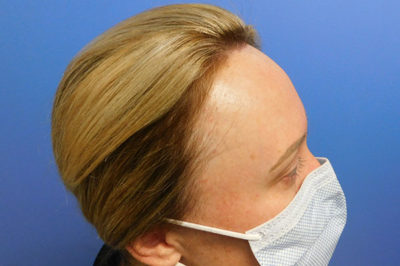
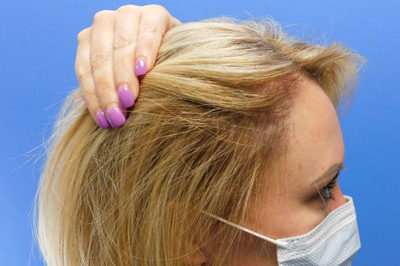
Hair plays a crucial role in overall appearance, and for many women, changes in hair density or part width can be particularly concerning. Female hair loss most often presents as gradual thinning rather than complete baldness and may progress slowly over time. Studies suggest that more than 30% of women experience some degree of hair thinning during their lifetime.
At St. Louis Hair Restoration, we evaluate and treat female hair loss using a medical approach. Treatment recommendations are based on the type of hair loss present, the degree of thinning, and any contributing health factors. Both surgical and non-surgical options are available depending on individual needs.
Causes of Hair Loss in Women
Proper treatment begins with identifying the cause of hair loss. During your consultation, you will undergo a thorough scalp examination and a review of your medical history. Female hair loss often differs from male hair loss and may involve multiple contributing factors.
Common causes include:
- Genetic hair thinning (female pattern hair loss)
- Hormonal changes related to menopause, postpartum shifts, or discontinuation of birth control
- Thyroid disease or thyroid medication
- Low iron levels or anemia
- Physical or emotional stress
- Nutritional deficiencies
- Certain prescription medications
- Traction alopecia caused by prolonged tension from tight hairstyles or chemical processing
Because medical conditions can contribute to thinning, Dr. Christopher Pawlinga also evaluates whether laboratory testing or coordination with a primary care physician is appropriate before recommending surgical treatment.
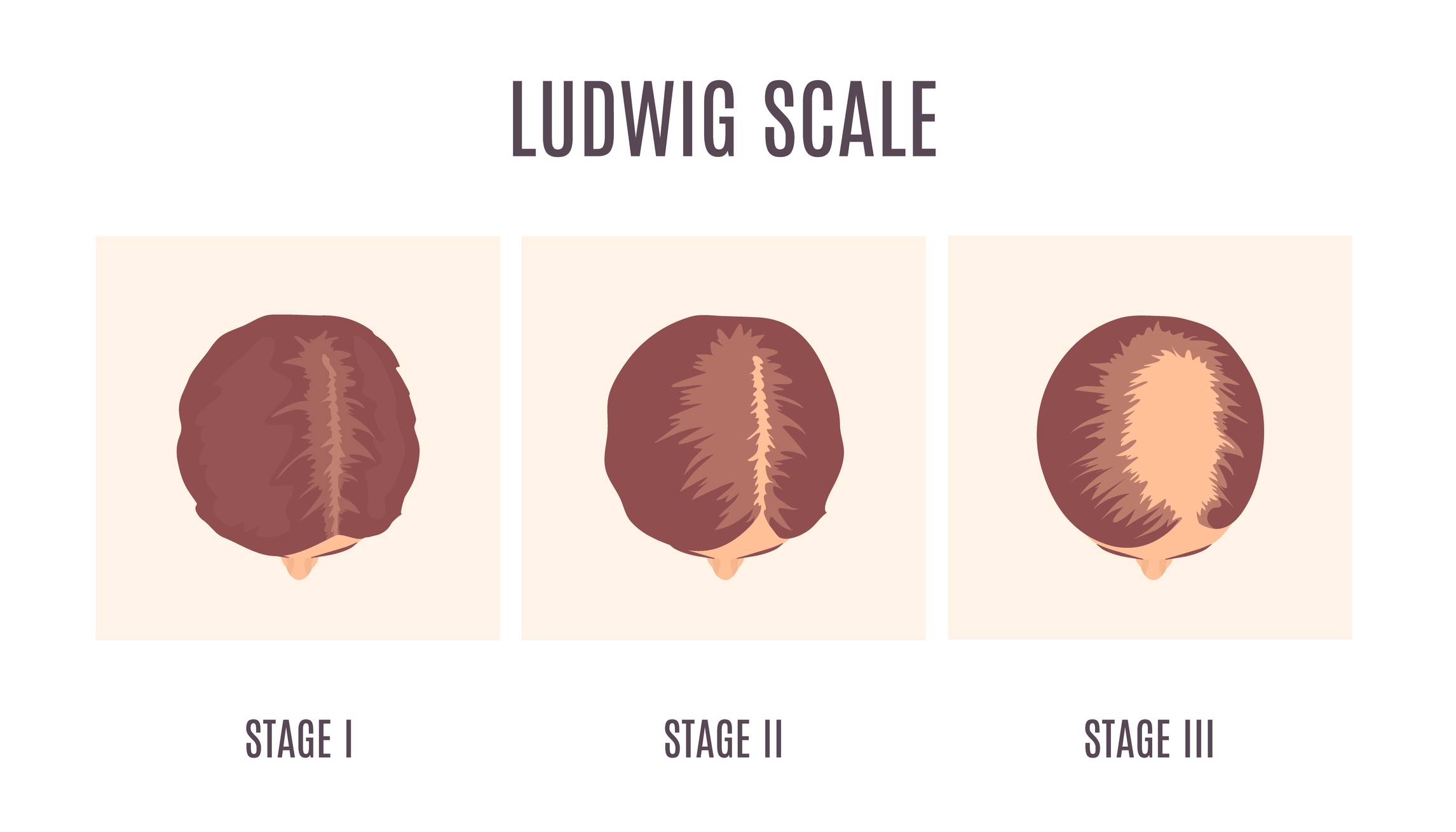
Female Hair Loss Patterns and the Ludwig Scale
Female hair loss typically appears as diffuse thinning over the top of the scalp with preservation of the frontal hairline. One of the most common early signs is a widening part.
The Ludwig Scale is used to help classify the extent of female pattern hair loss into mild, moderate, and advanced categories. Not all patients fit neatly into a single stage, but the scale is helpful for guiding treatment decisions.
Patients with early thinning may benefit from >non-surgical therapies, while others with more established loss may be candidates for hair transplantation. In cases of advanced thinning, surgical options may be limited, and alternative solutions, such as hair systems, may be considered.
Related Reviews
“Losing my hair, I felt like I was just not me anymore. I had a lengthy conversation with Gregg Kreyling and decided to go ahead with the transplant. I would like to thank Gregg and his team for helping me restore the confidence in me that was lost. Again, Thank you! Highly recommended for those who are seeking a new restored self you.”
by Randall R.
Hair Transplantation for Women
Hair transplantation restores density by relocating healthy follicles from the back or sides of the scalp into thinning areas. Two surgical methods are available: Follicular Unit Extraction (FUE) and Follicular Unit Transplantation (FUT).
Because FUE requires shaving the donor area, many female patients prefer the FUT strip method. With FUT, donor hair is harvested from beneath the existing hair, allowing the surrounding hair to conceal the area during healing. This makes FUT a practical option for women who wish to maintain their current hairstyle throughout recovery.
Traction Alopecia
Traction alopecia is a type of hair loss caused by prolonged tension on the hair follicles, often resulting from tight hairstyles, such as braids, weaves, or ponytails, or chemically treated hairstyles. It commonly affects the frontal hairline and temple regions.
If identified early, traction alopecia can often be improved with adjustments to hairstyling habits. In cases where follicles are permanently damaged, hair transplantation may be considered to restore density along the hairline. Treatment planning depends on the extent of follicle loss and the scalp’s overall health.
Eyebrow Hair Restoration
Some women experiencing scalp hair loss also notice thinning eyebrows, which is often related to over-plucking, aging, or certain medical conditions. Eyebrow transplantation may be an option for patients seeking permanent restoration. During consultation, candidacy is evaluated based on hair characteristics and desired shape.
Non-Surgical Hair Loss Treatments
Non-surgical therapies may be appropriate for women with early thinning or those who are not candidates for surgery.
Available options include:
- Platelet-Rich Plasma (PRP) Therapy, which uses concentrated platelets from the patient’s own blood
- CapillusRX Laser Cap, a low-level laser therapy option suitable for female patients
These treatments are discussed as part of a long-term hair preservation plan when appropriate.
Cost of Female Hair Restoration in St. Louis
The cost of hair restoration varies based on the degree of hair loss, the treatment method selected, and the number of sessions required. A personalized estimate is provided after consultation and examination.
Why Choose St. Louis Hair Restoration
St. Louis Hair Restoration is led by Dr. Christopher Pawlinga, a physician who specializes in hair transplantation. With more than eighteen years of experience, Dr. Pawlinga has treated thousands of patients with a wide range of hair loss patterns, including female pattern thinning and traction-related loss.
His background in internal medicine allows him to approach hair loss from a medical standpoint, considering underlying health factors that may contribute to thinning before recommending treatment. Each patient undergoes an individualized evaluation to determine candidacy, appropriate technique, and realistic expectations.
This methodical approach supports long-term hair health and ensures that treatment plans align with both medical findings and aesthetic goals.
View Real Patient Results
Review real treatment results to better understand what hair restoration can achieve. Our gallery showcases outcomes from actual patients treated at our Kirkwood office, including women with thinning hair and pattern-related hair loss.
Before

After
FAQs About Female Hair Loss
Yes. Some forms of hair loss, such as those related to stress, illness, or hormonal changes, may be temporary. Identifying the cause is important before determining whether treatment is needed.
Timelines vary based on the cause and type of treatment. Non-surgical therapies may take several months to produce visible changes, while transplanted hair typically begins to grow within three to four months.
In most cases, yes. Specific guidance is provided based on the selected treatment and the condition of your scalp.
Treatment may still be appropriate, but the focus is on long-term stability and preservation of existing hair.
No referral is required. If medical conditions are suspected, coordination with your physician may be recommended.
Schedule a Female Hair Restoration Consultation
If you are experiencing hair thinning or changes in hair density, a consultation can help identify potential causes and review suitable treatment options. Your concerns and medical history are discussed in a private, supportive setting, with no obligation to proceed.