FUE Hair Restoration at St. Louis Hair Restoration
If you are researching an FUE hair transplant in St. Louis, St. Louis Hair Restoration offers Follicular Unit Extraction, or FUE, for both men and women.
FUE is one of the most popular hair transplant options because it does not involve removal of a strip of scalp and does not leave a linear donor scar. Instead, grafts are harvested individually from the back and sides of the scalp and placed into the hairline, frontal scalp, mid-scalp, or crown, depending on the patient’s goals and donor supply.
At St. Louis Hair Restoration, every FUE hair transplant is planned around the patient’s pattern of hair loss, donor characteristics, long-term goals, and realistic expectations for coverage and density.
What Is an FUE Hair Transplant?
An FUE hair transplant is a hair restoration procedure in which naturally occurring follicular units are extracted one by one from the donor area and then transplanted into the areas where more hair is desired.
Because grafts are removed individually, there is no strip incision and no linear scar. This makes FUE a popular option for patients who want a shorter haircut in the future or who prefer a hair transplant method that avoids the scar associated with FUT.
FUE hair transplantation is commonly used to restore:
- Receding hairlines
- Frontal hair loss
- Thinning in the mid-scalp
- Crown thinning or baldness
- Certain scalp scars in select cases
Who Is a Good Candidate for FUE Hair Transplant Surgery?
Good candidates for FUE hair transplant surgery often include patients who:
- Have male pattern baldness or female pattern hair loss
- Have enough donor hair available in the back and sides of the scalp
- Want to avoid a linear donor scar
- Prefer a hair transplant option that allows for shorter hairstyles
- Understand that donor supply is limited and must be used strategically
- Want natural-looking hair restoration that lasts as long as the donor hair does
Not every patient with hair loss is automatically a candidate for surgery. Some patients may need medical therapy first, some may need to stabilize ongoing loss, and others may need a conservative approach so donor hair is preserved for future needs.
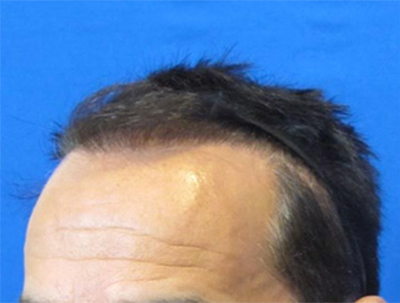
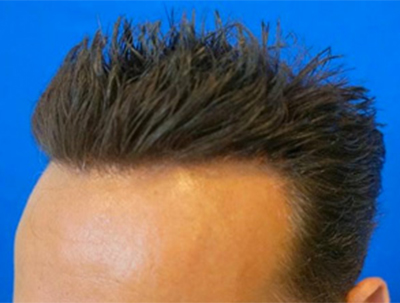
See More Results
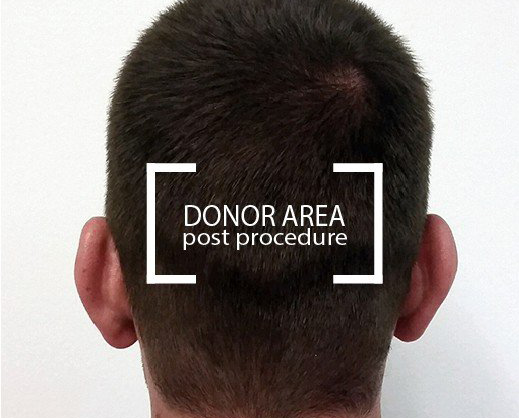
Donor Area Preparation for FUE
With FUE, the donor area needs to be trimmed short enough for graft harvesting. The amount of trimming depends on the size of the procedure, the area being treated, and the patient’s hairstyle.
For some patients, only part of the donor area needs to be trimmed. For others, a larger portion may need to be clipped. This is discussed during consultation so patients understand what to expect before surgery.
How Does an FUE Hair Transplant Work?
FUE hair transplant surgery begins with planning the donor area and recipient area. Individual grafts are then harvested from the donor zone, usually the back and sides of the scalp. After the grafts are removed, recipient sites are created and the grafts are placed carefully into the thinning or balding areas.
Every hair transplant is different. The number of grafts, the characteristics of the hair, the amount of donor supply, and the size of the area being treated all influence the surgical plan.
Benefits of FUE Hair Transplant
Patients considering an FUE hair transplant in St. Louis often choose this procedure because of the following benefits:
- No linear strip scar
- Individual graft harvesting
- Natural-looking hair transplant results
- Ability to wear the hair shorter than with many strip procedures
- Flexible treatment of the hairline, frontal scalp, mid-scalp, and crown
FUE Hair Transplant Recovery
After an FUE hair transplant, small scabs form in both the recipient area and donor area. Mild swelling, redness, tenderness, or itching can occur during the early healing period. Most of the visible healing occurs over the first week to ten days, although this can vary from patient to patient.
Patients receive detailed post-operative instructions regarding washing, sleeping, activity restrictions, and when normal routines can be resumed.
It is also normal for the newly transplanted hairs to shed in the weeks after surgery. This is part of the normal hair transplant timeline and does not mean the grafts failed.
Read more
When Will I See FUE Hair Transplant Results?
Hair transplant results take time. Most patients do not see meaningful growth immediately after surgery because transplanted hairs typically shed before regrowth begins.
In general:
- Shedding occurs in the first several weeks
- Early growth often begins within a few months
- Noticeable improvement develops gradually
- Results continue to mature over 12 months, and the crown can sometimes take longer
Final hair transplant results depend on several factors, including hair caliber, color contrast, curl, donor supply, graft count, and the size of the area being treated.
How Many Grafts Will I Need?
The number of grafts needed for an FUE hair transplant depends on the area being treated, the amount of existing hair loss, hair characteristics, and the level of density the patient is hoping to achieve.
Some patients may only need grafts for the frontal hairline. Others may want to address the front, mid-scalp, and crown. Because donor supply is limited, graft planning matters. During your consultation, we evaluate how many grafts may be appropriate and what type of result is realistic based on your donor area and long-term hair loss pattern.
How Much Does an FUE Hair Transplant Cost in St. Louis?
The cost of an FUE hair transplant in St. Louis depends on the number of grafts needed, the complexity of the case, the area being treated, and the overall surgical plan.
Some patients need a smaller FUE procedure focused on a receding hairline or thinning frontal scalp. Others may need a larger case involving more grafts or more than one procedure over time.
At St. Louis Hair Restoration, pricing is based on the individual case rather than a one-size-fits-all approach. During your consultation, we review the graft count, goals, and expected coverage so you have a better understanding of the procedure and cost.
Why Choose St. Louis Hair Restoration for FUE in St. Louis?
Patients looking for FUE hair transplant surgery in St. Louis want natural-looking results, realistic planning, and a team focused specifically on hair restoration.
At St. Louis Hair Restoration, consultations are designed to evaluate more than just where you want more hair today. We also look at donor supply, future hair loss, graft planning, hairline design, and long-term strategy. Every case is different, and not every patient needs the same graft count or the same approach.
We believe that honest consultations, thoughtful planning, and careful donor management matter just as much as the procedure itself.
FUE Hair Transplant FAQ
The donor area usually needs to be trimmed short enough for graft harvesting. The amount of trimming depends on the size of the case, the area being treated, and your hairstyle.
FUE does not leave a linear strip scar like FUT. Instead, it leaves small dot-like marks in the donor area that are typically much less noticeable.
Most patients begin to see early growth within a few months, with continued improvement over time. Results continue to mature over 12 months, and the crown can sometimes take longer.
That depends on the size of the area being treated, your donor supply, hair characteristics, and the level of density you are hoping to achieve. This is determined during consultation.
Cost depends on the number of grafts needed, the area being treated, and the complexity of the case. Pricing is reviewed during consultation based on your individual goals.
Not necessarily. Each procedure has advantages and disadvantages. The right option depends on your hairstyle preferences, donor characteristics, goals, and long-term planning.
Schedule Your FUE Hair Transplant Consultation in St. Louis
If you are considering an FUE hair transplant in St. Louis, contact St. Louis Hair Restoration to schedule your consultation. We can evaluate your hair loss, donor supply, graft needs, and goals and help you determine whether FUE is the right option for you.
During your consultation, we can discuss:
- Whether you are a good candidate for FUE
- How many grafts you may need
- What type of result is realistic
- What donor area preparation will involve
- What the recovery process looks like
- How much an FUE hair transplant may cost
To learn more about FUE hair transplant surgery in St. Louis, contact St. Louis Hair Restoration to schedule your consultation.